
Girona Temps de Flors 2026 Guide
Discover Girona Temps de Flors 2026 with a local guide. Explore floral installations, hidden courtyards, cathedral displays, night visits, and the best ways to experience Girona’s most beautiful festival.
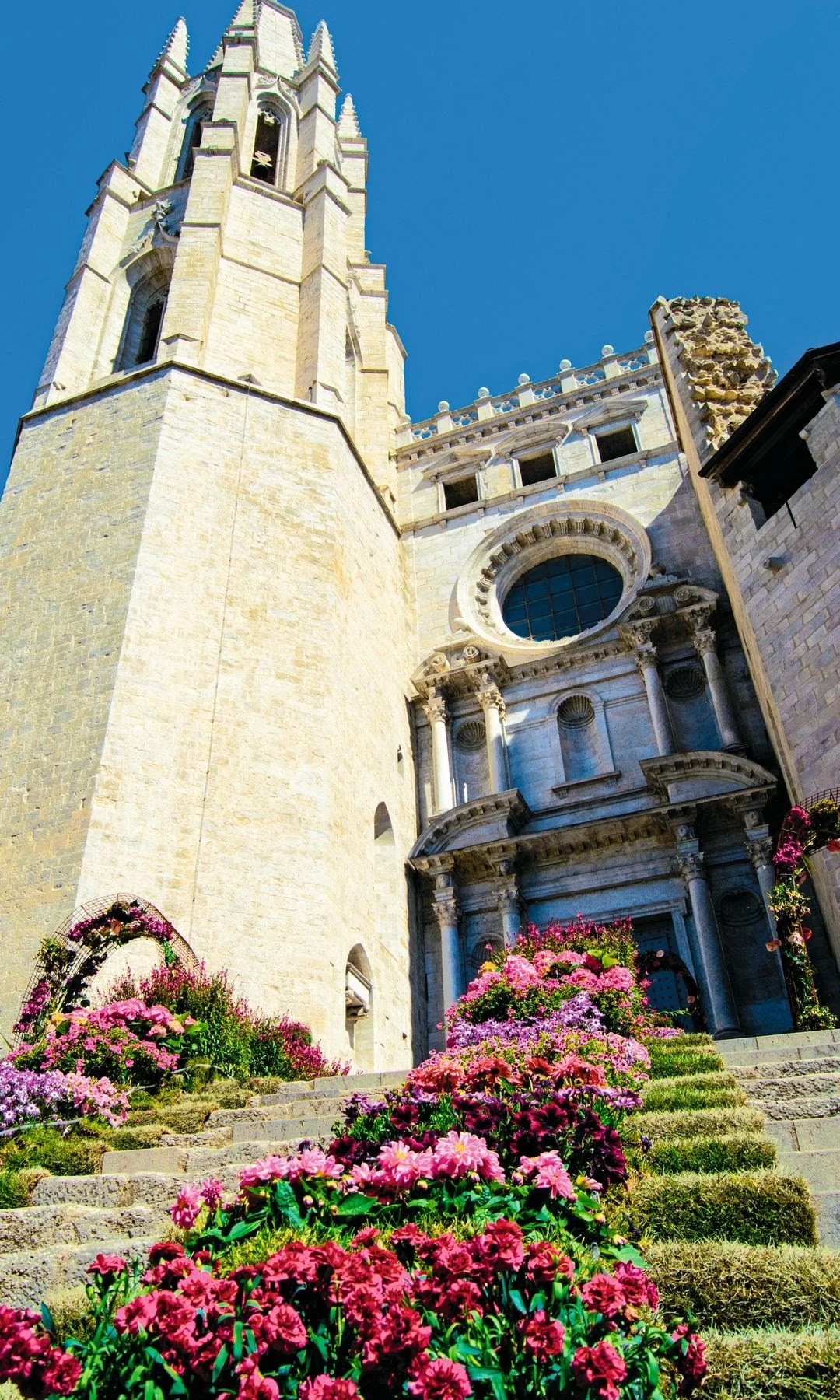
The Basílica de Sant Feliu, decorated for Temps de Flors.
Girona Temps de Flors: Experience Girona’s Most Beautiful Festival
If there is one moment of the year when my city transforms completely, it is during Girona Temps de Flors. As a local Girona guide, I can honestly say there is no experience quite as magical as walking through the Barri Vell while ancient stone streets, staircases, courtyards, and monuments become covered in thousands of flowers and artistic floral installations.
In 2026, Girona celebrates the 71st edition of this internationally famous festival, one of the most beloved spring events in Catalonia.
What Is Girona Temps de Flors?
Girona Temps de Flors is a city-wide floral exhibition that fills Girona’s historic center with color, fragrance, art, and creativity. The festival celebrates the arrival of spring while showcasing the beauty of Girona’s historic architecture and cultural heritage.
For nine days each May — this year from May 9 to May 17, 2026 — visitors can explore floral displays inside monuments, gardens, churches, courtyards, and hidden spaces that are normally closed to the public during the rest of the year.
The result is an extraordinary fusion of history, art, and nature.
From Small Flower Show to International Festival
Temps de Flors began in 1954 as a modest flower exhibition inside Girona City Hall. Originally called the “Provincial Flower Exhibition Contest,” the event steadily grew into one of the city’s most important cultural festivals.
Over the decades, the exhibition expanded from City Hall to Sant Pere de Galligants, later to Sant Domènec, and eventually throughout the entire Barri Vell.
Several key figures helped transform the festival into the international event it is today, including Rosa Maria Labayen, David Marca, and Josep Tarrés, whose passion and vision helped shape the identity of Temps de Flors for future generations.
Floral Art Throughout Girona’s Historic Center
One of the most special aspects of the festival is the collaborative spirit behind it. The floral installations are created by professional floral artists, designers, students, neighborhood associations, and hundreds of volunteers who donate their time and creativity to the event.
In 2026, visitors can explore up to 114 different floral spaces across the city.
Some of the most famous locations include:
Girona Cathedral
Arab Baths of Girona
Sant Pere de Galligants
Hidden private courtyards normally closed to the public
Historic staircases and medieval streets throughout the Barri Vell
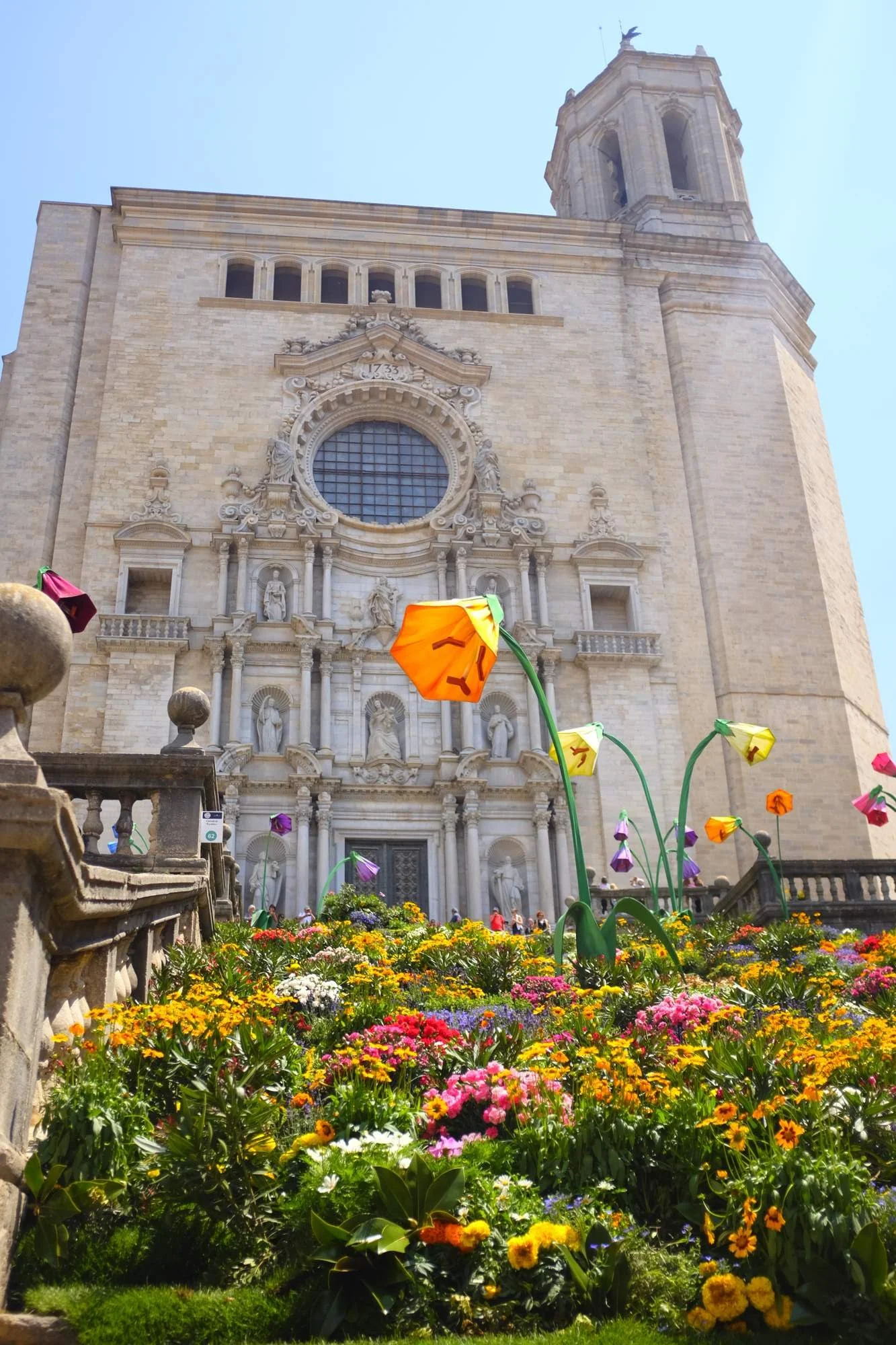
Girona Cathedral, decorated for Temps de Flors
Many of these private spaces only become accessible thanks to the generosity of local residents and organizations such as the Association of Friends of Old Girona.
The festival itself is organized by the Girona City Council with support from sponsors, local cultural associations, and volunteer groups.
The Official Poster for 2026
The official poster for the 71st edition was created by Berta Bermúdez i Caparrós, an art student from Institut Santiago Sobrequés.
The design features a young woman surrounded by flowers, symbolizing spring, renewal, beauty, and the artistic spirit of the festival itself. The poster captures the elegance and creativity that define Girona during Temps de Flors.
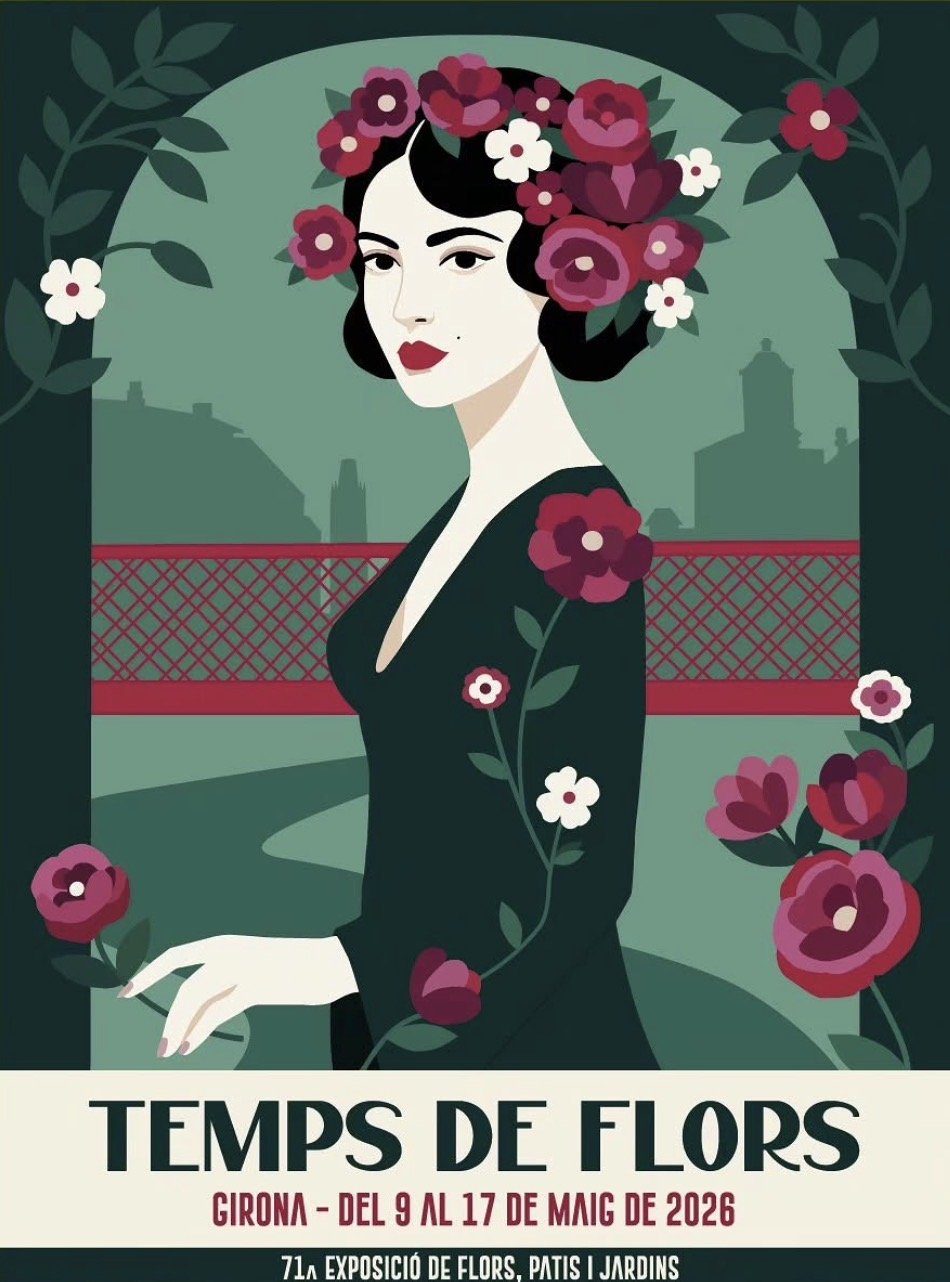
The official poster for Temps de Flors 2026
Keyt’s Tips for Visiting Temps de Flors
Book a Guided Tour
During the festival, Girona becomes extremely busy. A private or small-group guided tour can help you navigate the crowds more efficiently while discovering the hidden stories behind the floral installations and historic sites. As an official local guide, I can also help you prioritize the most worthwhile spaces so you avoid spending valuable time waiting in unnecessary lines.
Visit at Night
Some of the indoor installations remain open late into the evening, especially on Saturdays, when certain spaces stay open until midnight. At night, the atmosphere changes completely. The lighting creates a mysterious and almost dreamlike experience that many visitors miss.
Visit During the Week If Possible
The final weekend is usually the busiest period of the festival. If your schedule allows, weekday visits are calmer and more enjoyable. Also note that some installations begin dismantling on the final evening starting around 7 PM.
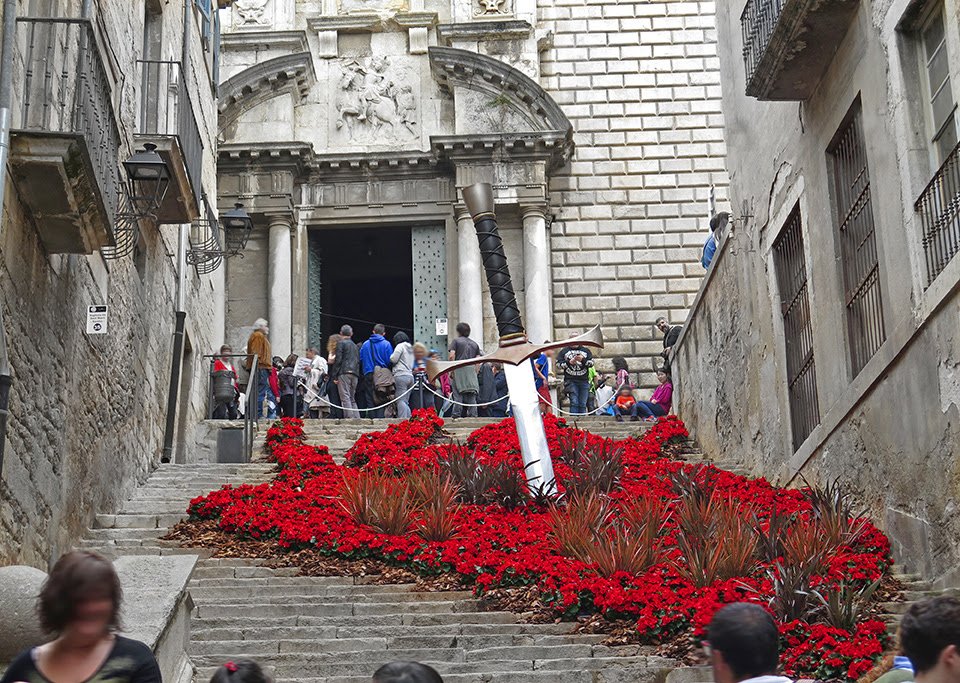
La Pujada de Sant Domènec, with Sant Martí Sacosta church at the top. Temps de Flors is one of the very few times that this church is open to the public.
Why Temps de Flors Is So Special
Temps de Flors represents the creative heart of Girona. It is a celebration of community, art, history, and spring itself.
As a Girona guide, one of my favorite things is watching visitors experience the contrast between the city’s medieval stone architecture and the temporary fragility of the flowers. The city feels completely transformed — alive in a different way. It is the kind of event that people return to year after year.
Discover Girona Temps de Flors with a Local Guide
Would you like a personalized route through Girona Temps de Flors 2026?
Join me to discover the hidden patios, floral installations, legends, and history behind Girona’s most beautiful festival.
Email: gironalocalguide@gmail.com
WhatsApp: +34 626 17 89 39
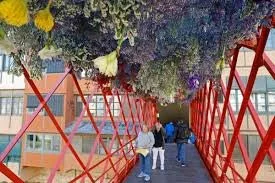
The Eiffel Bridge, decorated for Temps de Flors
Girona Cathedral: Visitor Guide
The Girona Cathedral (Cathedral of Saint Mary of Girona) is the most iconic landmark in the city’s historic center, the Barri Vell. Towering above the skyline, it is far more than a beautiful monument—it is a living history of Girona, shaped over centuries and filled with architectural wonders, legends, and one extraordinary world record.
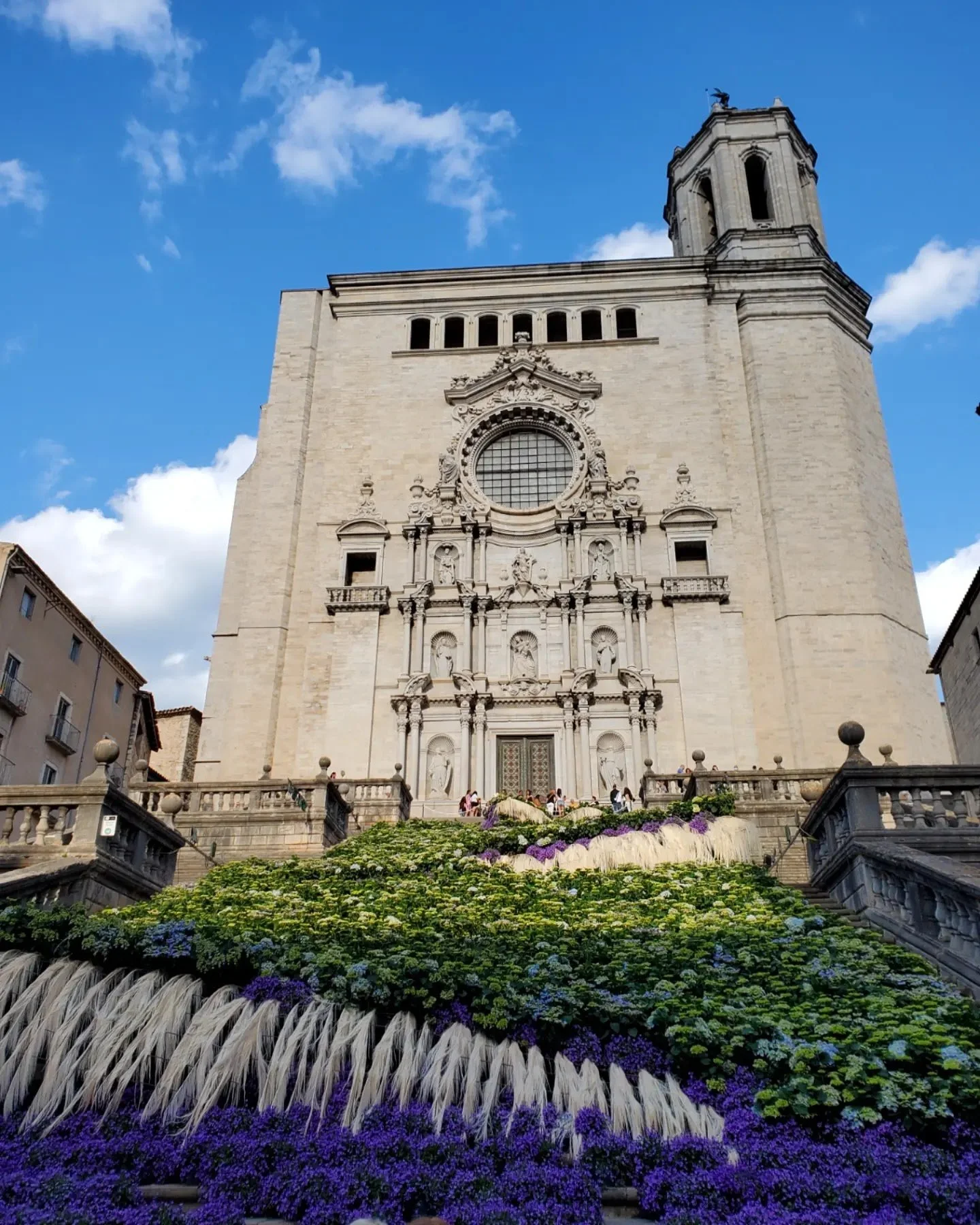
Girona Cathedral decorated for the Temps de Flors festival in May.
Discover Girona Cathedral in the Heart of the Old Town
The Cathedral of Saint Mary of Girona is the defining landmark of the city’s historic center, the Barri Vell. Rising above the skyline, it is far more than a beautiful monument—it is a story written in stone, shaped over centuries and filled with architectural innovation, legends, and one remarkable world record.
Standing at the base of its grand staircase for the first time is a moment most visitors don’t forget.
A World Record: The Widest Gothic Nave in the World
One of the most extraordinary features of Girona Cathedral is its Gothic nave, measuring 22.98 meters wide—the widest Gothic nave in the world.
Across all architectural styles, only St. Peter’s Basilica in the Vatican surpasses it.
This vast interior exists thanks to a bold decision made in 1417, when builders chose to construct a single nave instead of three. The result is a space that feels both immense and harmonious—unusual for Gothic architecture, and unforgettable in person.
The Iconic Girona Cathedral Stairs
Before entering the cathedral, visitors are greeted by its famous monumental staircase:
90 steps, divided into three sections
One of the most distinctive Baroque staircases in Europe
A well-known filming location, including Game of Thrones
Climbing the steps has become a ritual for visitors. At the top, the Baroque façade, decorated with sculptures of saints such as Saint Narcís and Saint James, creates a striking visual backdrop.
Tip: When you reach the top, turn around—the view over Girona’s Old Town is one of the best in the city.
A Cathedral Built Over Centuries
Girona Cathedral is unique because it blends multiple architectural periods into a single structure:
Romanesque Origins (11th Century)
The Charlemagne Tower still stands, along with a rare trapezoidal cloister designed to adapt to the original Roman walls.
Gothic Expansion (14th–17th Centuries)
Construction began in 1312, culminating in the bold decision in 1417 to build the single, record-breaking nave.
Baroque Façade (from 1680)
The dramatic façade, designed like a monumental altarpiece, dominates the entrance from above the staircase.
What to See Inside Girona Cathedral
Inside, the 50-meter-long nave leads to the Cathedral Treasury Museum, home to some of Girona’s most important historical and artistic treasures:
The Tapestry of Creation (11th–12th century)
A Romanesque masterpiece depicting the origins of the universeThe Beatus of Girona (10th century)
A richly illustrated manuscript of the ApocalypseThe Gothic Altarpiece
A masterpiece of gilded silver and enamel above the main altarCharlemagne’s Chair
An 11th-century marble episcopal seat surrounded by legend
Legends and Curiosities
Girona is known for its legends, and the cathedral is no exception:
The Stone Witch (La Bruixa de Pedra)
A unique gargoyle in human form, said to be a woman turned to stone after throwing rocks at the cathedral. It is the only human-shaped gargoyle on the building.
The “Angel” That Isn’t an Angel
The figure atop the bell tower is commonly called an angel—but it actually represents Faith.
The Chair Legend
It is said that if a couple sits together, they will marry within a year. If a man sits alone, he will never marry. A detail that tends to make visitors pause before sitting!
Experience the Cathedral Beyond the Surface
Seeing the Cathedral is one thing—but understanding why it was built this way, what the details mean, and how it connects to Girona’s history brings it to life in a completely different way.
Tips for Visiting Girona Cathedral
Best time to visit -
During Girona Temps de Flors, when the staircase is beautifully decoratedBest photo spot -
From the top of the stairs, looking out over the Old TownLook for details -
Try to spot the Stone Witch gargoyle—many visitors miss itVisit timing -
Early morning or late afternoon offers a quieter, more atmospheric experience
Why Girona Cathedral Is a Must-Visit
To understand Girona, you need to experience its cathedral. It’s not just about its scale or beauty—it’s about the layers of history, the bold architectural choices, and the stories hidden in its details. From its record-breaking Gothic nave to its legends and sweeping views, Girona Cathedral is one of the most unforgettable places to visit in Catalonia.
Ready to Explore Girona?
If you want more than just photos—and prefer to experience the city with context, stories, and local insight -
Xuixos of Girona: History, Tradition, & Where to Try Them Today
The xuixo (pronounced “shoo-shoo”) is one of Girona’s most iconic pastries. It’s made from a light brioche-style dough filled with pastry cream, then deep-fried and rolled in sugar.
The result is:
Crisp, golden exterior
Soft, airy dough
Creamy, rich filling
When done well, it’s surprisingly delicate—not heavy—despite being fried.
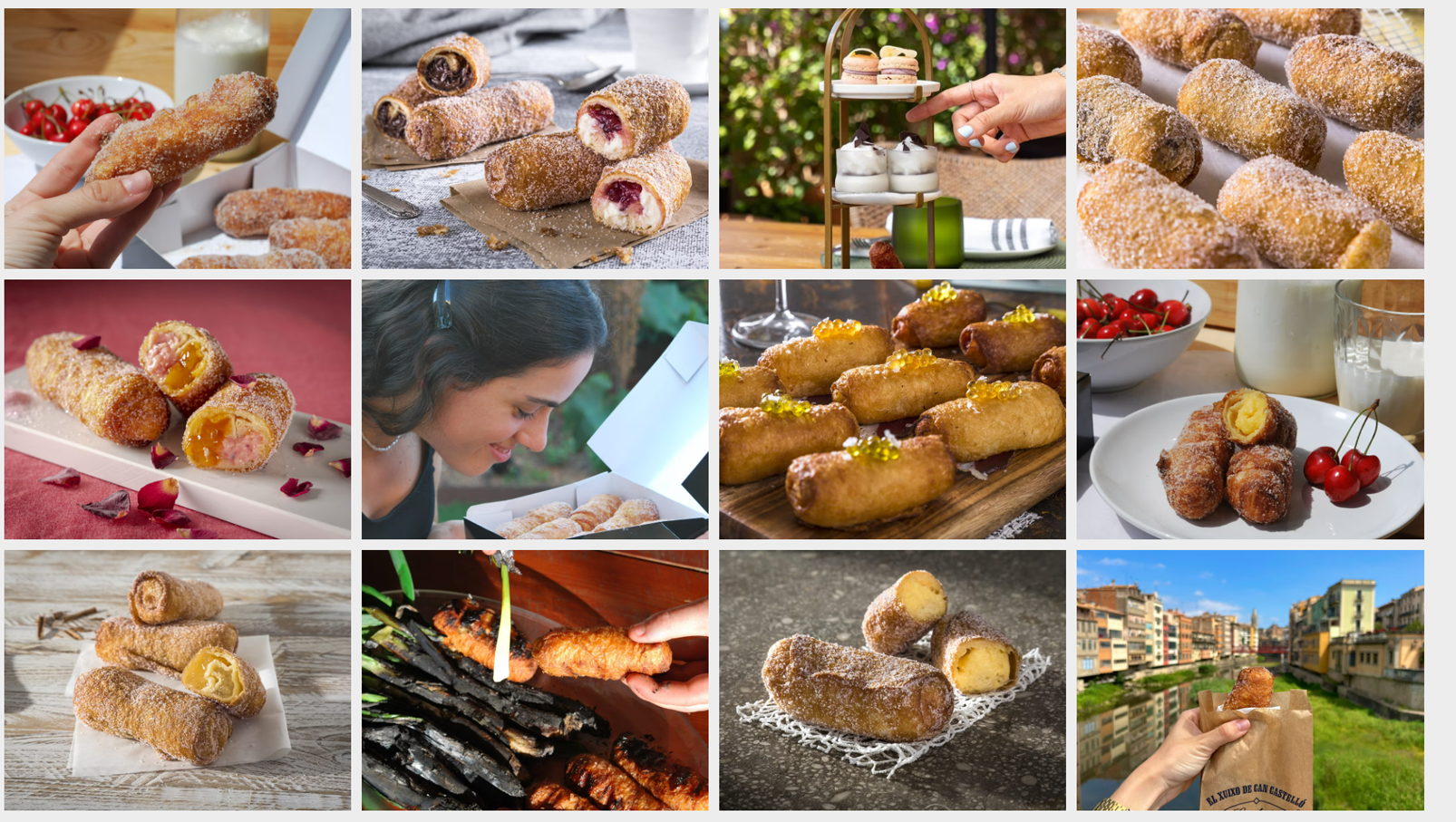
A wide variety of xuixos are available for you to try in Girona!
What is a xuixo?
The xuixo (pronounced “shoo-shoo”) is one of Girona’s most iconic pastries. It’s made from a light brioche-style dough filled with pastry cream, then deep-fried and rolled in sugar.
The result is:
Crisp, golden exterior
Soft, airy dough
Creamy, rich filling
When done well, it’s surprisingly delicate—not heavy—despite being fried.
Where does the xuixo come from?
The xuixo is deeply tied to Girona’s identity, and like many great foods, its origin sits somewhere between history and legend.
One popular story says that in the early 20th century, a French pastry chef took refuge in Girona and shared a recipe with a local baker. The name “xuixo” is often said to come from the sound it makes when frying (“shui-shui”), though some link it to the French word choux.
Today, the xuixo is so emblematic of the region that it holds Protected Geographical Indication (PGI) status.
The classic xuixo (and why it works)
The traditional version is all about balance:
Light, well-proofed dough → doesn’t absorb excess oil
Smooth pastry cream → rich but not overly sweet
Perfect frying → golden and dry, not greasy
A great xuixo should feel refined—almost elegant—rather than heavy.
Where to try xuixos in Girona today
Girona has many excellent pastry shops, but there’s also a new wave of creativity around the xuixo.
One of the most talked-about spots right now is Can Castelló, where the classic xuixo is being reimagined with modern fillings.
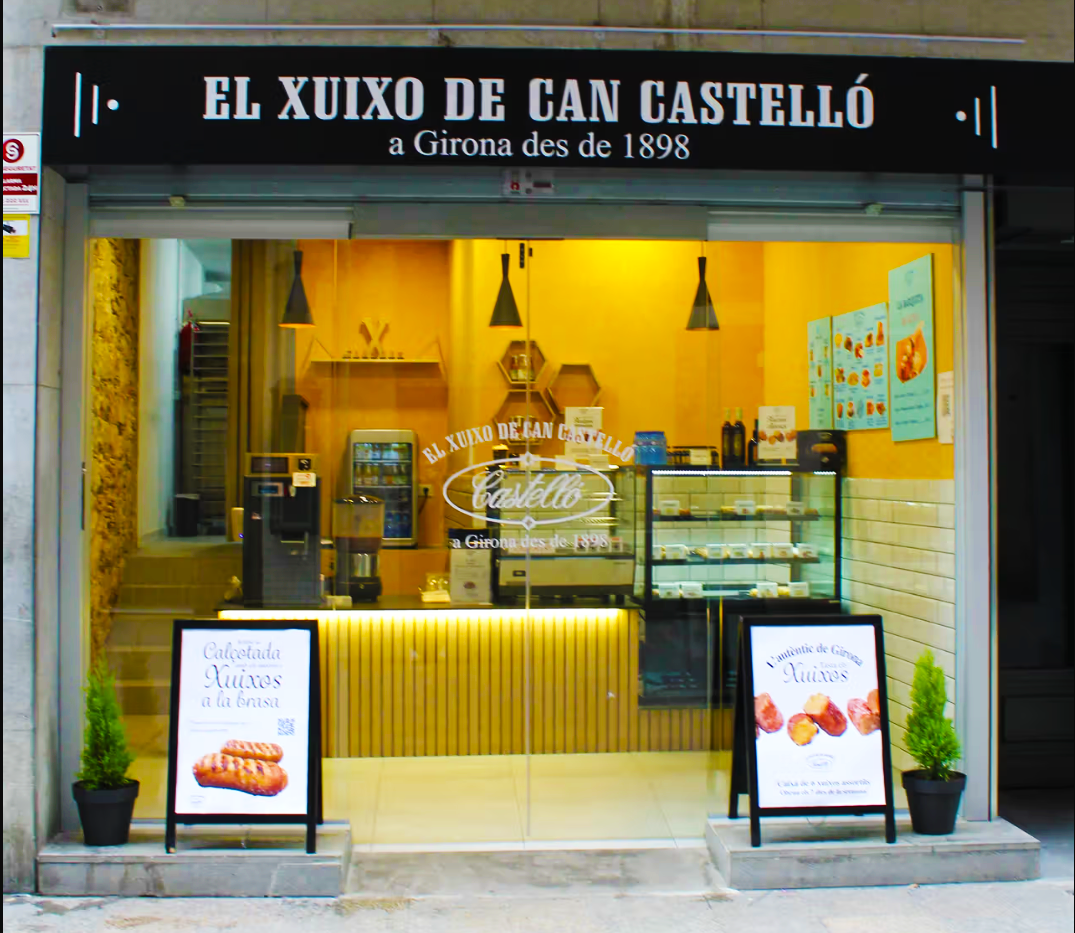
⭐ Can Castelló
A standout: cheesecake-filled xuixos, made using artisan cheesecake with real cheese, from famed cheesecake bakery Jon Cake.
This version is especially interesting:
Traditional fried, sugar-coated exterior
Dense, creamy cheesecake interior
A more indulgent, contemporary flavor profile

Xuixos with JonCake cheesecake filling in front, and chocolate in back.
It’s a perfect example of how Girona’s food scene blends tradition with innovation.
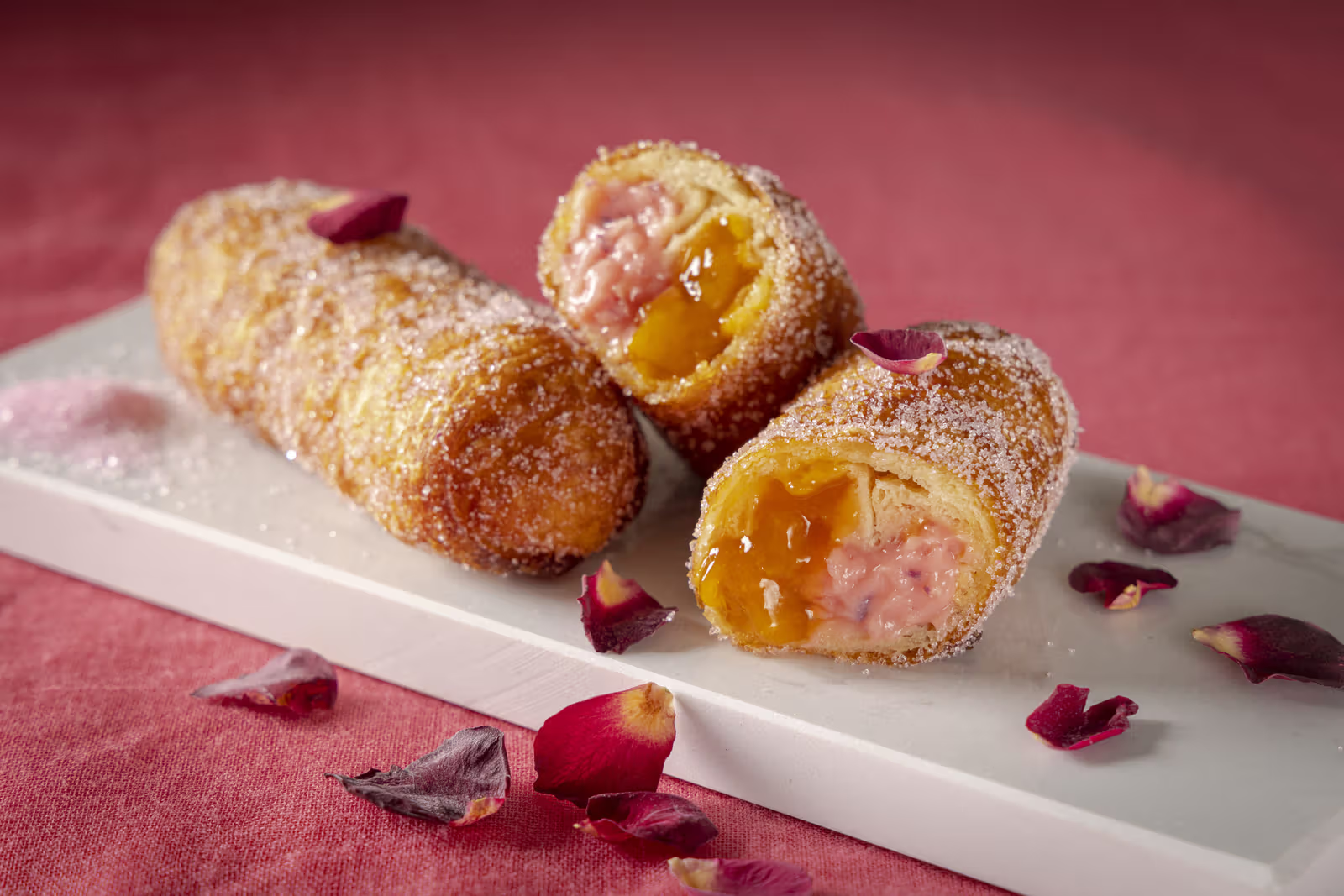
A Rose Xuixo, made for Girona’s Temps de Flors
Tradition vs. innovation
The xuixo is quietly evolving:
Traditionalists → insist on classic pastry cream
Modern pastry chefs → experiment with chocolate, ratafia, and cheesecake
Girona embraces both. You can have a perfectly classic xuixo in the morning—and a reinvented one in the afternoon.
Local tips
Try it freshly made, ideally still slightly warm
Pair it with coffee rather than eating it on the go
Don’t judge it by a mediocre one—quality varies a lot
Final thought
The xuixo isn’t just a pastry—it’s a small piece of Girona’s identity.
From its legendary origins to modern interpretations like the cheesecake version at Can Castelló, it continues to evolve while staying unmistakably local.
If you’re visiting Girona, trying a good xuixo isn’t optional—it’s essential.
👉 Give El Xuixo de Can Castelló a try at Carrer de l'Argenteria, 7. 17004 Girona
Monday - Friday: 10:00am - 8:30pm.
Saturday: 10:00am - 9:00pm.
Sunday: 10:00am - 8:00pm